
Mold Remediation
Containing mold growth comes first in mold remediation, followed by removal, cleaning and correction of the moisture problem that allowed it.
See mold remediationSchedule a clearance check after cleaning in Acton. Independent assessment can examine moisture and required samples before repairs.
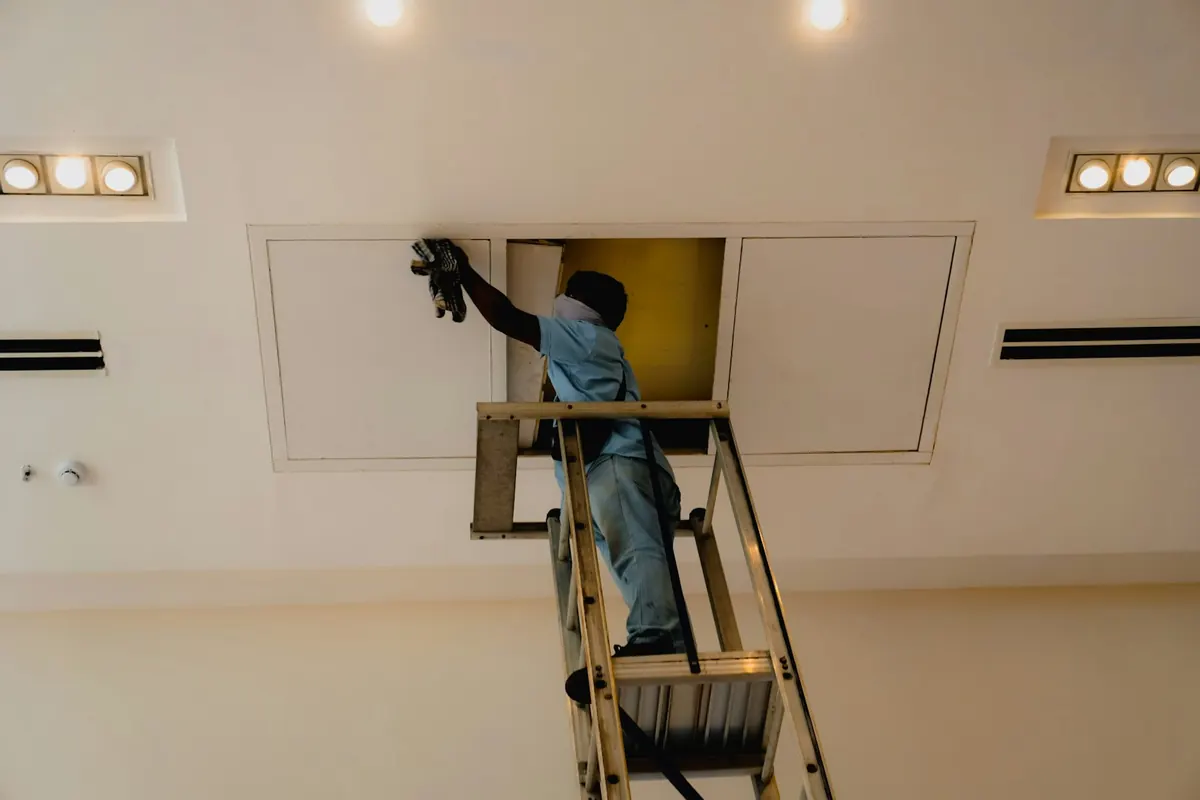
It evaluates cleanliness and whether rebuilding can begin.
The protocol sets removal boundaries and criteria for passing. The check that follows is known as PRV, post-remediation verification or a mold clearance test.
The final check looks at visible conditions and includes moisture readings. It may add surface sampling or air sampling. Checks for debris, damp materials and growth remain necessary even when a lab reports results.

Your protocol should state the visual requirements, moisture limits, sampling plan and steps after failure.
Find out who will resolve criteria that were not met before reinspection.
Ask how visual findings, a spore trap, outdoor air sample and lab results work together.
Find out who takes each sample and what independent testing lab completes the analysis.
Schedule an independent assessment when it is required by the protocol or an agreement for the property.
Show each finding separately and identify moisture mapping and sample locations.
Collect required samples before removing the containment barrier or negative air pressure.
Check for dry affected materials and confirm correction of the leak.
Have exposed cavities checked prior to installing new finishes over them.
Protect the work area once cleaning, removal and correction of the moisture source are complete.
Call (844) 352-3560Inspect and Test gives residential post-remediation clearance a $300 to $700 cost range. For one room on the Colorado Front Range, that source estimates $300 to $600 as the range. Area, room count and samples affect cost.
No site visit was used for these ranges, which are drawn from published national cost guides. Your property price is set after an on-site assessment and should be explained before work starts.
Ask about cost: (844) 352-3560A covered claim may include payment through homeowners insurance. The water source and language in the policy determine coverage.
Payment may fall to the landlord, owner, insurer or tenant based on the moisture source, lease and policy. Under California's housing law, visible mold found by a health officer or code enforcement officer can make a rental substandard. Renters can contact their local health or code enforcement department to ask for an inspection.
Retain water-loss photos along with invoices, the remediation scope, drying documentation and clearance report. California's Toxic Mold Protection Act includes a landlord written-disclosure section (Health and Safety Code 26147). By its own wording it applies only after the state adopts mold exposure standards, and the state health department has said it could not set them.
Find out whether approval is required for testing or the policy has a mold sublimit.
Use an assessor who did not perform the removal.
Complete the cleanup plan, then get an independent decision before rebuilding begins.
Determine the moisture source, affected area and clearance criteria for the work.
Use poly sheeting and an air filtration device to limit dust movement.
When cleaning fails, remove moldy drywall, ceiling tile or insulation.
Use a HEPA vacuum and damp wiping. Treatment does not replace cleaning.
Use moisture readings to confirm drying after the water problem is fixed.
Document the result and correct unmet criteria before rebuilding.

Phone at any hour. Your call reaches a mold clearance testing specialist who hears your concerns and explains the process ahead.
Complete clearance must address visible conditions, moisture and the purpose behind sampling.
Allergy or asthma symptoms can be triggered by mold in some people. CDC guidance says people with asthma, lung disease or weak immune systems face more risk.
Read spore counts with the outdoor baseline, visible conditions and moisture.
During removal, a HEPA air scrubber used with poly sheeting can reduce particle movement.
Can you clean it yourself? EPA says an area under about 10 square feet can often be homeowner-cleaned. Get professional help for larger areas, HVAC involvement, sewage, extensive water damage or contaminated water.
The protocol guides comparison of cleaned, removed and replacement materials.

California has no state license or certification for mold assessors or remediators, according to the California Department of Public Health. General construction work above a small dollar amount does need a license from the Contractors State License Board (CSLB), so it is worth checking a contractor's license there and asking about their mold training. Find out if local rules require separate parties for remediation and assessment.
Ensure the water issue is fixed first. To prevent mold growth, dry water-damaged items and areas within 24 to 48 hours.
The federal government has not set an indoor mold limit. Spore counts should be interpreted using moisture findings, the baseline sample and visible conditions.
The California Department of Public Health (CDPH) Air Quality Section publishes mold and dampness guidance and a mold FAQ. CDPH says visible mold, dampness, and mold odor are unhealthy and should be fixed, and that routine mold testing is not needed when mold is visible. Verify the requirements that apply to the report, property and assessor.
Timing includes a visit, the lab's analysis and a report. Confirm it before containment comes down or repairs are planned.
The full mold clearance testing guide covers what is cleaned or removed, odor and air quality work, and the rules that apply in your state.
Read the full mold clearance testing guideProperty access, local housing conditions and humidity may affect how you plan mold cleanup, containment and moisture control.
At 8 percent renter occupancy, many households can trace a leak through the whole property and arrange removal after the moisture source is corrected.
Because the median home dates to 1986, maintenance history matters when tracing whether repeated plumbing, roof, or drainage problems have kept materials damp.
The local housing stock is 93 percent single-family, making ventilation, drainage, and plumbing checks across the property relevant to keeping cleaned areas dry.
With 15 percent of seniors living alone, regular checks under sinks and around ceilings can still help reveal moisture before mold spreads behind materials.
Your call can include questions about mold cleanup availability in close-by communities and ZIP codes.
Containing mold growth comes first in mold remediation, followed by removal, cleaning and correction of the moisture problem that allowed it.
See mold remediation
During a mold inspection, moisture readings and a visual check help show where growth is present and what feeds it.
See mold inspection
Mold testing collects surface or air samples for laboratory analysis of the mold types present and their amounts.
See mold testing
Workers first use a mold inspection to find the affected areas and then remove and clean the growth.
See mold inspection and removal
Mold cleanup clears mold from materials and surfaces, puts damaged belongings into bags and prepares the space for repair work.
See mold cleanup
During mold abatement, the affected space is closed off and contaminated materials are removed as part of the mold removal work.
See mold abatement
Hidden mold remediation locates and clears hidden mold behind wall surfaces, beneath flooring and over ceilings where it is out of view.
See hidden mold remediation (behind walls)
Mold damage restoration removes the mold and then repairs or replaces the drywall, insulation, flooring and other materials it damaged.
See mold damage restorationConsider it when an insurer wants records, hidden or widespread growth was involved, the written protocol requires verification, or you want independent confirmation before rebuilding. Every minor surface cleaning or small cleanup does not automatically require sampling.
For residential post-remediation clearance, Inspect and Test publishes $300 to $700 as its range. The estimate in its Colorado Front Range guide is $300 to $600 for one room. Room count, sample count, the outdoor control sample, lab charges and a repeat visit can change your total.
The site visit covers the visual inspection, moisture readings and required sampling. Report preparation and testing lab processing both contribute to the final timeline. Ask about expected timing prior to containment removal, occupant access, repairs or planned reconstruction.
The company responsible for removal should not decide clearance, which belongs to an independent assessor. Confirm the sampling plan and testing lab along with any written criteria and state requirements. California has no state license or certification for mold assessors or remediators, according to the California Department of Public Health. General construction work above a small dollar amount does need a license from the Contractors State License Board (CSLB), so it is worth checking a contractor's license there and asking about their mold training. With separate roles, the business that cleaned the area does not judge its own work.
The process is an independent check after remediation. Visible conditions, debris, moisture and dust are examined, and the protocol may also require the assessor to collect surface or air samples. The clearance report says whether the area meets the listed criteria or needs more cleaning.
Airborne particles are collected in a spore trap and sent to a lab. Because spore counts vary, the assessor may use an outdoor air sample as a comparison for indoor findings. Interpret the results using collection conditions, the written protocol, moisture readings and visible findings together.
Calls about mold clearance testing are answered 24 hours a day, so you can receive clear and practical guidance.